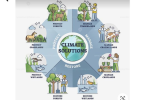
Sustainability advice often arrives as a scolding: give things up, pay more, feel guilty. But the most effective sustainable living practices share a secret — they save money at the same time as they save resources, because waste is waste in every currency. The energy you do not use is billed at zero. The food you do not throw away was already paid for once. The product you repair is a product you do not buy again. This guide focuses on the practices where the green choice and the frugal choice are the same choice, so your household budget and your footprint shrink together.
Energy: The Biggest Win Is the Energy You Never Use
Every sustainability list should start where the money is: heating, cooling and hot water dominate most household energy bills. The cheapest practices are behavioural — turning heating down by a single degree, washing clothes at lower temperatures, drying on a rack when the weather allows — and they compound quietly across a year. The next tier is sealing the leaks: draught-proofing doors and windows, insulating the loft properly, bleeding radiators and servicing the boiler so it runs at the efficiency you paid for.
After that comes attention to the always-on load. Devices on standby, an ancient second fridge in the garage, lights left blazing in empty rooms — individually trivial, collectively a real line item. A plug-in energy monitor, borrowed from a library or bought cheaply, turns these invisible costs visible for a weekend, and visibility changes behaviour more reliably than any lecture. Households routinely find ten percent savings in this exercise alone, without buying a single new appliance.
Food Waste: Throwing Away Money, Literally
The average household throws away a startling share of the food it buys — and with it, the money spent, the water and energy that produced it, and the packaging it arrived in. The practices that fix this are management, not martyrdom: plan the week’s meals before shopping, shop the fridge first, and keep a visible “eat me first” shelf for anything approaching its date. Freezers are the unsung heroes — bread, milk, cooked grains, leftover sauces and half-used vegetables all freeze well and rescue countless emergency takeaways.
Understanding dates helps too. “Best before” is a quality guide, not a safety cliff; “use by” is the one to respect. Storing food correctly — most vegetables in the crisper, herbs in water, cooked food cooled and refrigerated promptly — stretches its life by days. Composting what genuinely cannot be eaten keeps it out of landfill. None of this requires perfection; halving your food waste is worth more than agonising over the last banana skin.
Reuse and Repair: The Habits Policy Is Built On
Government policy increasingly backs the repair economy — right-to-repair rules, repairability labels, support for reuse — because the maths is irresistible: keeping products in service longer beats recycling them early on every measure. Households can ride that shift. Before replacing anything, run the repair question honestly: is it actually broken beyond fixing, or just unfashionable, or broken in one cheap part? Repair cafés, local fixers and manufacturer spare parts have never been more available.
The same mindset reshapes buying. Choosing durable, repairable versions of the things you use hardest — and reusable versions of the things you use most — quietly eliminates whole categories of repeat spending. Real-world swaps illustrate the range, from refillable household staples to the reusable alternatives explored in this look at reusable products beyond disposables: the pattern is identical in every category, a slightly higher first cost replaced by years of not buying the disposable version. Even the final frontier — genuinely worn-out items — has better options than landfill, from textile banks to the skincare-and-self-care routines that extend the life of what you own, as covered in this guide to caring for your skin properly. Care, in every domain, is cheaper than replacement.
Buy Smart: Prices, Claims and Pressure
Sustainable shopping is also defensive shopping, because “green” has become a marketing costume worn by plenty of ordinary products at extraordinary prices. Learn the difference between certified claims and vibes: an accredited eco-label with a number you can check is evidence; a leaf on the packaging is decoration. Compare unit prices, read the conditions, and be alert to pricing games — a tactic under pressure across retail generally, as this site’s report on local retailers revisiting pricing strategies to protect margins shows. When margins are squeezed, headline prices and real costs drift apart, and the careful shopper who reads the small print keeps the difference.
The greenest purchase is usually the one you skip. A simple pause rule — wait a week on anything non-essential — quietly deletes a large fraction of impulse buys, and with them their packaging, delivery miles and eventual disposal. What survives the week is likelier to be used, valued and kept, which is the entire point.
Water and the Garden: Small Systems, Real Savings
Water is cheap in many regions, which is precisely why it gets wasted — but the energy used to heat it is not cheap at all. Shorter showers, a showerhead that mixes air with water, fixing the dripping tap you have been ignoring for a year: each is small, and together they are the kind of unglamorous win sustainable living is actually made of. In the garden, a water butt turns roof runoff into free irrigation, mulch keeps moisture where plants need it, and drought-tolerant planting reduces the whole question’s importance year by year.
If you have outdoor space, composting closes the loop elegantly: kitchen scraps and garden waste become the soil improver you would otherwise buy in plastic bags. It is the household economy in miniature — a waste stream converted into a resource, at no ongoing cost but a little attention.
The thread connecting all of this is that sustainable living practices are systems, not sacrifices. A meal plan, a repair habit, a pause before buying — each one runs quietly in the background of ordinary life once it is established, saving money and resources without demanding daily virtue. That is precisely why sustainable living practices outlast resolutions: they ask for design, once, rather than willpower, forever.
Conclusion
Sustainable living practices that last are the ones that pay you back: use less energy, waste less food, repair and reuse before replacing, read green claims and pricing with a sceptical eye, and treat water as the heated, pumped resource it is. Start with the practice whose savings you will notice first, bank the win, and let it fund the next. A household that runs this way is not merely greener — it is cheaper to run, calmer to manage, and quietly proof against every price rise the future is planning.